We and our Monsters

The monsters are ourselves on the other side of the screen.

Beings that love as we do, but they are afraid of not being matched, because they know in advance that they will not be accepted and that true happiness is sudden and therefore a rare thing.

Nothing is harder to bear than a succession of beautiful days

Goethe

Facing monsters is overcome fears. It’s to face the Sphinx and let her muted. According to Lutz Müller the “frightening figures of human fantasy” (demons, devils, witches, evil deities, figures and hideous monsters) cause fears and feelings of danger to the human personality.

Fears represented in all times and in all cultures are archetypal, “are basic universal experiences that determine the experience and behavior of the individual, both now and in the future.”
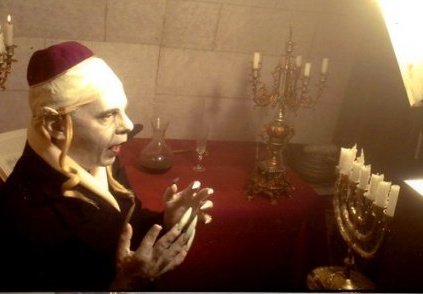
Andree Guittcis as Nosferatus

Andree Guittcis as Nosferatus

The horror film works as “scheduled catharsis” safely purging our fears. To Luiz Nazario, in an interview to the Superinteressante magazine, “the monster was trivialized by the culture industry and isn’t anymore a reference of transgression, a spokesman of the different. The monster used to be  a metaphor for the outsider and today it’s an object of consumption. ”

The disgust and wonder that monsters exert have been going on across the centuries. They are the very representation of the fears and dangers present in the human experience, in our evolutionary process. We all purge our fears, and sometimes, they are embodied on an iconographic form.

Text reprinted from Revista Universitária do Audiovisual – O monstro, o cinema e o medo ao estranho de 15 de maio de 2012 (in portuguese).

Nosferatu: the Image of an Era

In 1922, the German film director Friedrich Murnau adapted Bram Stoker‘s work – for copyright reasons – and launches with the name Nosferatu, returning the image of the ancient vampire gruesome and ghastly previous literature, to cause a different impact.

On should remember that the resources of that time, such as film, color (in this case, black and white), scenery, and production dynamics directly influenced the construction of the plot, creating the effect of psychological impact needed to characterize a movie genre Terror that is usually classified as movies about vampires.

A screenshot of the 1922 film, Nosferatu.

A screenshot of the 1922 film, Nosferatu.

He came off the fantastic genre that included narratives about supernatural events and is now named the movies they appear vampires, werewolves, monsters, demonic possessions, etc.. Their scripts and screenplays are based on the macabre and terrorize through the makeup and special effects used from 1960.

Bram Stoker created the modern vampire myth and gave the creature name: Count Dracula, Anne Rice however was the one to put the foundations for the vamps that are part of the current batch of films, television series and books; they are young, beautiful and passionate.

Bela Lugosi as Dracula, anonymous photograph from 1931

Bela Lugosi as Dracula, anonymous photograph from 1931

Literature and film incorporated the vampire to the modern imagination, the allure for them is rooted in its unique ability to escape death and dribble time, in most cases they maintain youth and beauty through all the eternity. Beings with incredible ability to adapt to several eras, vampires make our interest remains always oscillating between high and low levels, but never completely disappearing.

The possibility of having life, eternal youth and beauty is as seductive as daunting.

Free adaptation of the text published in the Electronic Journal Guari. Click here to view the full text (in portuguese).

Andree Guittcis talks about NY and his new intervention

On the 50th edition of the magazine “Revista Estação Aeroporto” the brazilian artist Andree Guittcis tells us a little bit about his favourite places in the Big Apple and gives an early bird information on his plans of a live art intervention in the streets of New York:

#NosferatuNY - Estação Aeroporto Magazine

#NosferatuNY – click in the image to see the full text (in portuguese)

Translation:

During this time as a resident in the city I’ll follow on some of my old projects, including a live art installation in the streets of New York, as Nosferatu (The Ruins of the Darkness), that I performed in a short movie in 2004 that could be seen in Movie Festivals in Brazil and around the World, besides keep on working as jewelry designer with an exhibit to be held at the Aaron Faber Gallery (at 53rd St.), date still to be confirmed.

You can read the full article at the magazine ISSUU website.

Outdoor screening of “Nosferatu” attracts 15.000 people to the Ibirapuera Park

The “All Souls’ Day” holiday had a gloomy mood for 15 thousand paulistanos, who gave up travelling, to check out the outdoor screening of the film “Nosferatu”, at the Ibirapuera Park (São Paulo’s equivalent to New York’s Central Park).

Original article from BOL website

Click on the image to seethe original article (in portuguese)

(Original article, written by Natália Guaratto for the website UOL,  updated in: 03/Nov/2012 – 15h14)

A restored copy of FW Murnau‘s classic silent movie, from 1922, was projected on the wall of the Ibirapuera Auditorium last Friday (2) as part of the closing of the 36th edition of São Paulo’s International Film Festival. Continue reading

Andree Guittcis fala sobre NY e sobre sua nova intervenção

Na edição #50 da Revista Estação Aeroporto o artista brasileiro Andree Guittcis conta um pouco sobre seus lugares preferidos na Big Apple e antecipa seus planos de uma intervenção de arte viva nas ruas da cidade:

#NosferatuNY - Revista Estação Aeroporto

#NosferatuNY – Revista Estação Aeroporto – clique na imagem para ler a íntegra da reportagem

Leia a reportagem inteira direto no site ISSUU da revista.

Nosferatu é destaque no programa Outras Coisas

O programa da webTV UNIESP cobriu o encerramento da 36ª Mostra Internacional de Cinema de São Paulo, quando uma cópia restaurada do clássico mudo de F.W. Murnau, de 1922, foi projetada na parede externa do Auditório Ibirapuera, com trilha sonora tocada ao vivo pela Orquestra Petrobras Sinfônica, com acompanhamento do coro Projeto X. Continue reading

Exibição de “Nosferatu” ao ar livre atrai 15 mil pessoas ao Parque do Ibirapuera

O dias dos finados teve clima sombrio para 15 mil paulistanos, que deixaram de viajar no feriado, para conferir a exibição do filme “Nosferatu”, ao ar livre, no Parque do Ibirapuera.

Texto original: Bol

Clique na imagem para ver o texto original

(Texto original de Natália Guaratto do UOL,  Atualizado em: 03/11/2012 – 15h14)

Continue reading

Nosferatu: a imagem de uma Era

Em 1922, o cineasta alemão Friedrich Murnau adapta a obra de Bram Stoker – por motivos de direitos autorais – e a lança com o nome de Nosferatu, retomando a imagem do antigo vampiro horripilante e medonho anterior a literatura, para causar um impacto diferenciado.

Lembremos que os recursos da época, tais como película, cores (no caso, preto-e-branco), cenário, e dinâmica de produção influenciavam diretamente a construção da trama, criando os efeitos de impacto psicológicos necessários à caracterização de um filme do gênero Terror que é como geralmente são classificados os filmes sobre vampiros.

A screenshot of the 1922 film, Nosferatu.

Imagem do filme Nosferatu (1922)

Continue reading

Nós e nossos Monstros

Os monstros somos nós do outro lado da tela.

Seres que amam como nós, mas têm medo de não serem correspondidos, pois sabem de antemão que não serão aceitos e que a verdadeira felicidade é repentina e, portanto, rara.

Nada é mais difícil de suportar que uma sucessão de dias belos
Goethe

Enfrentar monstros é superar medos. É enfrentar a esfinge e deixá-la muda. Segundo Lutz Müller as “figuras amedrontadoras da fantasia humana” (demônios, diabos, bruxas, divindades más, figuras horrorosas e monstros) causam medos e sensações de perigo à personalidade humana.

Os medos representados em todos os tempos e em todas as culturas são arquetípicos, “são experiências universais básicas que determinam a vivência e o comportamento do indivíduo, tanto no presente como no futuro”.

Andree Guittcis as Nosferatus

Andree Guittcis como Nosferatus

O cinema de horror funciona como “catarse programada”, purga nossos medos em segurança. Para Luiz Nazário, em entrevista concedida a revista Superinteressante, “o monstro foi banalizado pela indústria cultural e deixou de (…) ser índice de transgressão, de porta-voz da diferença. O monstro já foi uma metáfora do outsider; hoje é um objeto de consumo”.

A repugnância e o encantamento que os monstros exercem atravessam séculos. Eles são a própria representação dos medos e perigos presentes na experiência humana, em nosso processo evolutivo. Todos nós expurgamos nossos medos e, ás vezes, eles ganham forma iconográfica.

Texto extraído da Revista Universitária do Audiovisual – O monstro, o cinema e o medo ao estranho de 15 de maio de 2012.

Nosferatus: A Ruína das Trevas (Resfest 2004)

O curta metragem de 2004, estrelado pelo artista brasileiro Andree Guittcis pode ser visto na íntegra através do youtube ou vimeo.

Selecionado para o Oitavo Festival Anual de Cinema Digital (RESFEST 2004) na categoria Shorts BR, o filme tem direção de Flavio Bekeredjian e foi inteiramente filmado em Super 8.

Nosferatus: RESFEST 2004

Nosferatus: RESFEST 2004